
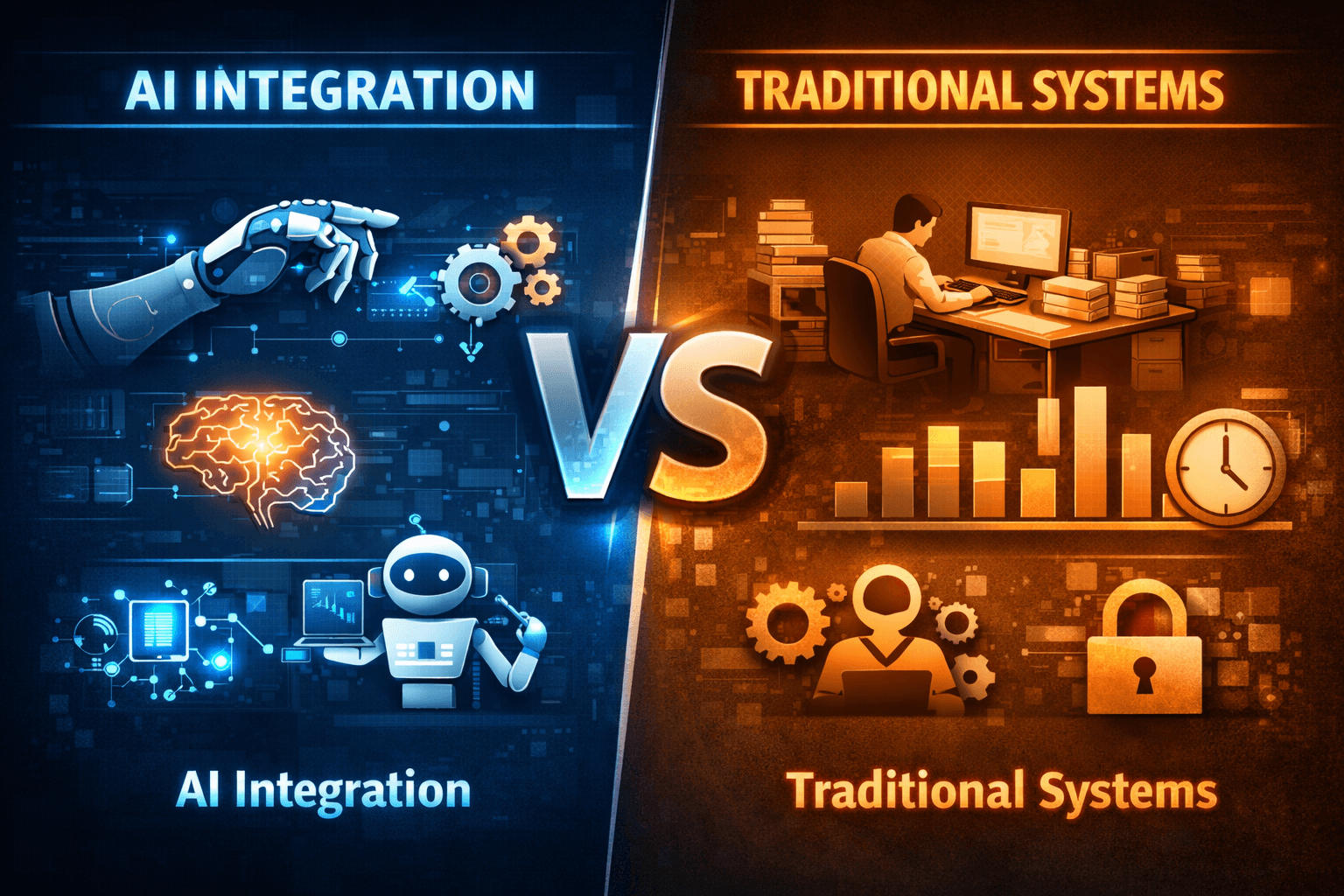
Businesses transitioning from traditional systems to AI integration grapple with a complex decision-making process. While AI promises vast improvements in efficiency and insights, weighing the benefits against the costs and risks of new technology is non-trivial. According to a McKinsey survey, organizations that have embraced AI are reporting revenue increases and cost efficiencies, yet challenges persist.
Understanding the nuances of AI integration versus traditional systems is imperative to making informed decisions for long-term success. In this article, we’ll delve into the key factors and considerations that can guide organizations through this critical choice.
Assessing AI Integration Versus Traditional Systems for Modern Business Needs
Deciding between AI integration and traditional systems hinges on the specific needs and future objectives of a business. AI-driven solutions typically offer scalability and data analysis capabilities that traditional systems cannot match. As such, businesses anticipating growth or those drowning in data may find AI integration offers compelling advantages.
A critical evaluation of existing infrastructure is necessary; some traditional systems might not seamlessly integrate with new AI technologies. For instance, legacy databases may require significant modification or replacement to harmonize with AI algorithms. Understanding the importance of ai integration is essential for maximizing the benefits of new technologies.
Actionable guidance includes performing a thorough needs assessment that encompasses current capabilities, desired improvements, and future objectives. Deciding if and when to transition should emerge naturally from this analysis, especially taking into account the potential for enhanced consumer insights and operational agility AI offers.
Key Decision Factors When Considering AI for Business Processes
The key decision factors when integrating AI into business processes revolve around understanding the impact on efficiency, cost, and human capital. AI systems can automate repetitive tasks, reducing the error rate and freeing up employees for more complex work, which can result in significant cost savings over time.
However, upfront investment in AI can be considerable. Businesses must account for not only the cost of the technology itself but also for the expense of training employees and possibly hiring new staff with the requisite skill sets. Moreover, there may be ongoing costs related to maintaining and upgrading AI systems. One should also consider the real impact of AI on work, which can lead to both workforce optimization and potential disruption.
Concrete steps include mapping out the potential return on investment of an AI system against its total cost of ownership. This should take into account the projected longevity of AI solutions and their ability to adapt to future business requirements.
Addressing the Challenges of Implementing AI in Legacy Systems
AI implementation in existing legacy systems presents a significant challenge due to compatibility and operational issues. Legacy systems often lack the infrastructure to support the vast quantities of data processing that AI applications require, potentially leading to substantial upgrading costs or even system overhauls.
An organization looking to incorporate AI into their legacy systems must evaluate the extendibility of their current setup. Vital considerations include data architecture, software compatibility, and the ability to support real-time analytics. For many businesses, legacy system modernization is a necessary precursor to AI integration.
Actionable guidance for companies includes a gradual approach, starting with pilot projects that integrate AI with smaller segments of the business. This allows for an assessment of the effects and challenges without disrupting core operations, providing valuable insights into more extensive transformation initiatives.
Measuring the Impact of AI Integration on Organizational Performance and Efficiency
To gauge the success of AI integration, businesses need to establish metrics that accurately reflect the technology’s impact on performance and efficiency. Performance can be measured through improvements in speed, accuracy, and output of business processes that are enhanced by AI—the more tangible and quantifiable, the better.
Efficiency gains may also be reflected in cost reductions, such as decreased labor expenses or lower operational costs due to predictive maintenance facilitated by AI. However, businesses should also be aware of indirect benefits, such as increased customer satisfaction and competitive advantages derived from sophisticated data analysis and personalization capabilities.
Implementing a comprehensive benchmarking strategy before and after AI integration can offer a clear view of the technology’s effectiveness. This strategy should encompass both the quantitative aspects, such as performance stats and financials, and qualitative outcomes like customer feedback and employee satisfaction.
Ultimately, navigating the intricate terrain of AI integration versus traditional systems demands a multifaceted analysis, considering not only the immediate benefits but also the strategic direction and capacity for innovation within the organization. As we usher in an era where artificial intelligence is becoming increasingly central to business operations, companies must judiciously weigh these considerations to remain competitive and responsive to the evolving market landscape.
