
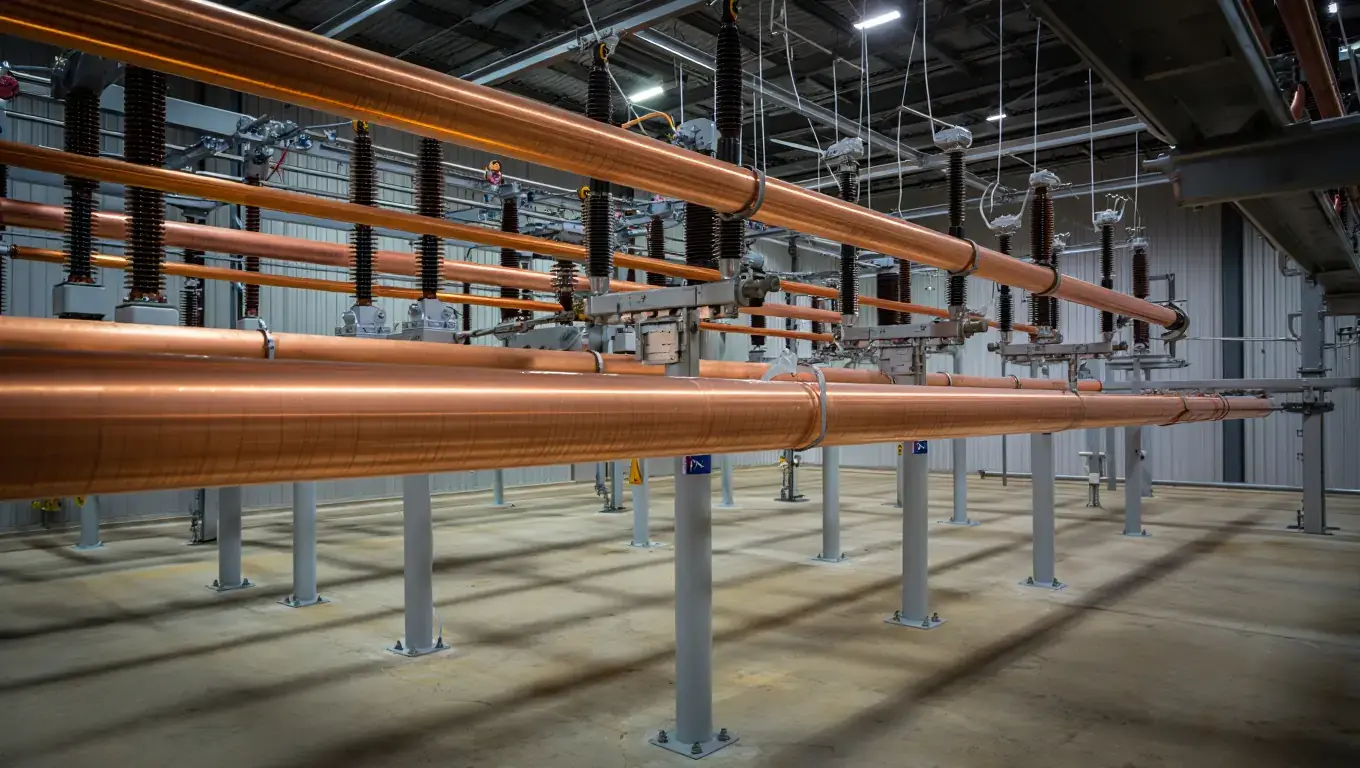
Have you ever opened a panel and wondered, “How does all this high current get shared without turning into a hot mess?” The answer is often a solid strip of metal—the bus bar—quietly doing the heavy lifting so your system doesn’t overheat, drop voltage, or fail at the worst moment. In big gear, the bus bar is the backbone. In battery packs, it’s the bloodstream. And in marine systems, it’s the difference between “works every time” and “why did this trip at sea?”
What You’ll Get From This Guide
We’ll keep it simple, practical, and human. You’ll learn:
- What is a bus bar and why it beats running bundles of cables for high current.
- The difference between ground bus bar and neutral bus bar (and why mixing them up is dangerous).
- Copper bus bar vs. aluminum bus bar in plain English—conductivity, weight, cost, and when each makes sense.
- Where battery bus bar, marine bus bar, and bus bar connectors fit in the real world.
- How the bus bar electrical panel is laid out so everything stays cool, safe, and serviceable.
Quick Definitions (Skim This First)
What Is A Bus Bar?
A bus bar (also written busbar or bus bar) is a rigid conductor—usually copper or aluminum—used to collect and distribute power inside switchgear, panelboards, battery packs, and substations. It replaces multiple parallel cables with a single, low-impedance “power rail,” improving cooling and simplifying taps.
Electrical Bus Bar Vs. “Electric Bus Bar”
Both phrases point to the same idea: a metallic bar that safely carries and shares current with minimal loss. People say electrical bus bar more often in industry, but electric bus bar appears in casual usage. Functionally, they mean the same thing.
The 17 Focus Sections (Each One In Plain English)
1) Bus Bar (Singular)
A bus bar is the single conductor “spine” inside power gear. It’s rigid, often uninsulated (but guarded), and sized for the current and temperature rise allowed by the enclosure. The big wins: fewer cable runs, cleaner layouts, better heat dissipation, and easier expansion—you can tap where needed instead of landing a dozen fat cables.
Real-World Example: In a distribution board feeding several large loads, one copper bus bar can feed multiple breakers. Techs can add or remove loads without rerouting heavy cables—faster work, fewer mistakes.
2) Bus Bars (Plural)
Bus bars come in different shapes: flat bars, rods, or even tubular sections for higher stiffness and cooling surface area. Multiple bus bars might be stacked (phases A/B/C plus neutral and ground) or arranged in a sandwich for compact, low-inductance paths that reduce stray fields and heating.
Pro Tip: More surface area = better cooling; stiffer sections = better spacing control under fault forces.
3) Electrical Bus Bar
When people say electrical bus bar, they usually mean a bus bar built and sized to electrical code/industry practice: correct cross-section for ampacity, proper creepage/clearance, and mechanical support to survive short-circuit forces. Simulation tools (and empirical tables) help size for temperature rise and magnetic forces.
4) Ground Bus Bar
A ground bus bar ties all equipment grounding conductors to the enclosure and, through the grounding electrode system, to earth. Its job isn’t to carry normal load current—it’s there for faults and noise control. You’ll land green or bare grounds here, not neutrals (except where the service bonding rules say otherwise at the main service disconnect).
5) What Is A Bus Bar
Short answer: it’s a solid, low-impedance path for distributing high current safely. Long answer: bus bars reduce resistive losses, simplify wiring, and improve serviceability. They’re built from copper or aluminum, kept rigid for spacing, and often left bare for better cooling (with covers/guards for safety). That’s why you see bus bars across substations, switchboards, and battery systems.
6) Copper Bus Bar
Copper bus bar delivers top-tier conductivity and mechanical strength. That means higher ampacity in a smaller cross-section and robust joints that stay tight through heat cycles. Yes, copper costs more and weighs more, but it’s the default in many critical systems because it runs cooler at the same current (all else equal). Typical copper conductivities approach ~100% IACS for high-purity grades.
Where It Shines: Mission-critical switchgear, tight enclosures where space and heat are a concern, and environments where low joint resistance matters.
7) Electrical Bus Bars (Plural)
Electrical bus bars are the backbone of distribution inside panels and gear. As soon as currents get high, they beat cable bundles on neatness, impedance control, and long-term maintenance. Modern designs use bus bars even at low voltages (like DC battery systems) because they’re robust under vibration and heat compared to multi-lug cable harnesses.
8) Battery Bus Bar
A battery bus bar links cells or modules inside a pack. Because packs see vibration, thermal cycling, and high surge currents, the bus bar has to keep resistance and inductance low while managing differential expansion between cells. In EVs and energy storage, bus bars reduce failure points compared with bundles of cables.
Mini-Story: Engineers who switched from crimped jumpers to purpose-built battery bus bars reported fewer hot joints and more consistent pack performance over thousands of cycles. (That’s the durability dividend bus bars bring in mobile systems.)
9) Grounding Bus Bar
A grounding bus bar is where you terminate equipment grounds to create a low-impedance path for fault current and EMI shunting. It must be bonded to the enclosure and sized to handle possible fault energy long enough to trip protective devices. Think of it as the safety drainpipe that only carries current when something goes wrong—or when you’re bleeding noise away.
10) Grounding Bus Bars (Plural)
In larger gear, you’ll see grounding bus bars distributed across cabinets so each section has a short path to ground. Multiple ground bus bars help with organized terminations and reduce the length of green wire runs that could add impedance. In sensitive systems, more bonding points can also help with noise control.
11) Marine Bus Bar
A marine bus bar handles humidity, salt, and constant motion. That means corrosion-resistant materials (often tinned copper), protected fasteners, covers, and layouts that meet marine standards such as ABYC. Marine-grade bus bars are typically labeled for polarity and include insulated bases or recessed hardware to prevent accidental shorts against metal hull structures.
12) Neutral Bus Bar
The neutral bus bar is the return path for normal load current in AC systems. In subpanels, neutrals and grounds must stay separated; only at the service disconnect are they bonded, per code, to prevent objectionable current on enclosures and equipment. Mixing neutral and ground downstream can put load current on metal parts—never a good idea.
13) Bus Bar Connector
A bus bar connector joins bus bars to devices or to each other. Common options include bolted joints, clamped joints, flexible laminated busbar jumpers, and specialty “tool-less” or spring-contact systems for vibration-heavy environments. Good connectors maintain contact pressure through heat cycles and minimize joint resistance (and hot spots).
14) Ground Bus Bars
This is the plural you’ll often see in panel specs—“install two ground bus bars left/right.” Same function as the single ground bus bar, just replicated for layout and convenience. More landing points, cleaner routing, and easier inspection. Keep them bonded properly and clearly labeled.
15) Aluminum Bus Bar
Aluminum bus bar is lighter and often cheaper than copper. It has lower conductivity, so you’ll typically use a larger cross-section to carry the same current. With the right alloy (e.g., 6101 or 1350), plating, and joint design, aluminum performs well—especially where weight or cost is a major concern (think EVs or large enclosures shipped to site). Typical aluminum bus bar conductivities are ~55–62% IACS, depending on alloy.
Watch-Outs: Oxide layers raise contact resistance; correct surface prep, compatible lugs, and joint pressure matter.
16) Electric Bus Bar
People say electric bus bar interchangeably with electrical bus bar. Context matters more than wording. In many catalogs and standards, you’ll still see “busbar” or “bus bar” as the standard term. Bottom line: same concept—rigid, low-impedance power distribution hardware.
17) Bus Bar Electrical Panel
Inside a bus bar electrical panel, you’ll find phase bus bars (A/B/C), a neutral bus bar, and one or more ground bus bars. Breakers or fuses tap the phase bus bars; neutrals land on the neutral bar; equipment grounds land on the ground bar. Good panels provide spacing for cooling, barriers for touch safety, and robust bracing to survive fault forces without letting the bars slap together.
Copper Vs. Aluminum: How To Choose Without Overthinking It
You can’t go wrong with copper bus bar for compact, high-amp builds that need low temperature rise and tight joints. If you’re weight- or cost-sensitive, aluminum bus bar works when you upsize the cross-section and follow best practices at the joints (proper plating, surface prep, hardware torque, and anti-oxidant compounds where specified). Many industrial teams use copper for main distribution and aluminum for branch or remote sections to balance cost and performance.
Fast Reality Checks:
- Conductivity: Copper ≈ ~100% IACS vs. Aluminum ≈ ~55–62% IACS (alloy-dependent).
- Weight & Cost: Aluminum is lighter and typically cheaper.
- Thermal Expansion: Aluminum moves more—design joints that keep pressure.
- Corrosion: Choose plating/coatings that suit the environment.
Ground Vs. Neutral: Keep Them In Their Lanes
In simple terms: the neutral bus bar carries normal return current; the ground bus bar is for faults and bonding. At the service disconnect, neutral and ground are bonded per code. In subpanels, keep them separate to avoid current on enclosures and strange nuisance trips. Always follow local code and manufacturer instructions.
Marine Notes: Salt, Vibration, And Standards
Boats live in harsh, moving environments. A marine bus bar should resist corrosion (tinned copper is common), protect against accidental contact, and meet relevant ABYC standards. You’ll also see recessed mounting holes and insulated bases so a loose screw doesn’t short against a metal bulkhead. As ABYC updates roll out, new guidance continues to tighten safety and reliability across DC and AC marine systems.
Battery Packs: Why Bus Bars Beat Cable Bundles
In EVs and stationary storage, a battery bus bar connects cells or modules with consistent, low-impedance paths that survive vibration and heat better than a nest of cables. Laminated bus bars can lower inductance, reduce EMI, and improve cooling paths. If you’ve ever chased down intermittent battery failures, you know: consistent joints and uniform current sharing are everything. Bus bars help you get that.
Bus Bar Connectors: Make Or Break (Literally)
Great bars with bad joints still fail. Choose bus bar connectors that maintain pressure as metals expand/contract. Bolted and clamped joints are common; flexible laminated jumpers handle vibration; advanced spring-contact solutions (tool-less) can keep contact resistance low in high-vibe applications. Whatever you pick, validate torque specs and do thermal scans under load during commissioning.
Sizing, Heat, And Layout: A Simple Mental Checklist
-
Ampacity And Rise: Size the electrical bus bar for expected current and acceptable temperature rise in your enclosure.
-
Spacing & Bracing: Keep adequate phase-to-phase and phase-to-ground clearances; add bracing to handle short-circuit forces.
-
Airflow: Bare bus bars cool better; use covers/guards where people might access.
-
Joints: Clean, flat, plated where required; proper hardware and torque; re-torque after thermal cycling when the manufacturer specifies.
-
Inspection: Infrared scans catch hot joints early.
Common Mistakes (And Easy Fixes)
- Mixing Neutral And Ground In A Subpanel. Keep them separate; bond only at the service disconnect. Fix: Move mis-landed conductors to the correct bar and install an isolated neutral kit if needed.
- Undersizing An Aluminum Bus Bar without accounting for lower conductivity. Fix: Increase cross-section or switch to copper where space is tight.
- Ignoring Corrosion In Marine Systems. Fix: Use tinned copper, protected hardware, and covered bus bars.
- Loose Or Poorly Prepared Joints. Fix: Clean surfaces, follow torque specs, consider Belleville washers, and verify with a thermal camera under load.
Quick Comparison Table (At A Glance)
| Keyword | One-Line Definition | Primary Use | Pros | Cons |
|---|---|---|---|---|
| bus bar | Single rigid conductor “spine” | High-current distribution | Low impedance, tidy, scalable | Needs guards/spacing |
| bus bars | Multiple conductors in a system | Multi-phase & ground/neutral | Organized layout | Requires careful bracing |
| electrical bus bar | Code-conforming bus bar | Panels, switchboards | Predictable performance | Must be sized & tested |
| ground bus bar | Equipment grounding hub | Fault current & bonding | Safety, noise control | Not for normal load |
| what is a bus bar | The core concept | All high-current systems | Simpler than cables | Needs proper protection |
| copper bus bar | Copper conductor | High-amp, compact builds | High conductivity & strength | Heavier and costlier |
| electrical bus bars | Pluralized backbone | Distribution inside gear | Serviceable & neat | Fabrication precision needed |
| battery bus bar | Pack interconnect | EVs & storage | Low impedance, robust | Needs vibration/thermal design |
| grounding bus bar | Grounding termination | Safety/EMI | Clear bonding point | Additive weight/space |
| grounding bus bars | Multiple ground bars | Large panels | Shorter ground runs | More hardware to maintain |
| marine bus bar | Corrosion-resistant bar | Boats & yachts | Survives salt/vibe | Must meet marine standards |
| neutral bus bar | Normal return path | AC panels | Keeps return off chassis | Miswiring risks safety |
| bus bar connector | Joint hardware/component | Bar-to-bar/device | Maintains contact | Bad joints = hot spots |
| ground bus bars | Plural variant | Layout convenience | Clean terminations | Same as above |
| aluminum bus bar | Aluminum conductor | Weight/cost-sensitive | Light, affordable | Larger cross-section |
| electric bus bar | Common alt phrasing | Same as electrical | Same function | Terminology confusion |
| bus bar electrical panel | Panel built on bus bars | Distribution boards | Organized, scalable | Needs proper bracing |
Mini FAQ (Straight Answers)
Q1: Why Use A Bus Bar Instead Of Big Cables?
Because a bus bar gives you a low-impedance, tidy, and scalable way to distribute high current with better cooling and easier taps. Less mess. Fewer terminations. Faster service.
Q2: Is Copper Always Better Than Aluminum?
Copper performs better per cross-section (higher conductivity, stronger joints). Aluminum wins on weight and cost—just size it larger and design joints correctly. Choose based on space, budget, and environment.
Q3: Can I Land Neutrals On A Ground Bus Bar?
Only where code allows bonding (typically at the service disconnect). In subpanels, neutrals and grounds must be isolated.
Q4: What’s Special About Marine Bus Bars?
Corrosion resistance, protective covers, and layouts that align with marine standards. Vibration and salt are tough, so hardware and plating matter.
Q5: Do Battery Bus Bars Really Help Pack Reliability?
Yes. They reduce connection count, improve current sharing, and hold up under vibration and heat better than bundles of cables.
Closing Thoughts (Human, Practical, And Actionable)
If you remember just three things about bus bars and electrical bus bars:
- Treat the bus bar as your system’s power highway—size it for current and heat.
- Keep neutral bus bar and ground bus bar roles clean to prevent safety issues.
- Choose copper bus bar or aluminum bus bar based on performance, weight, and cost—and get the joints right.
Continue Reading ➔ How Many USB Ports Does My Motherboard Have?
